
UK History
I imagine that most people of my generation learnt their first history from the stories related by our Primary school teachers. Alfred and the cakes! Robert the Bruce and the spider. Elizabeth 1 and the Armada. It was all part of our National story and whether we realised it or not, imbued us with a sense of who we are. As the years went by my interest increased until when I was about fifteen I decided to read the Oxford History of England, originally in 14 volumes. I think I read about 8. The general theme was that although all events had varying consequences our island tale had all happened for the best. Whatever remarkable event occurred, Roman invasion, Saxons, Vikings, Normans etc had changed us for the better. It occurred to me that since every generation had been brought up with the fait acompli, it would be bound to say it had happened for the best. But to me there were two events where things had gone totally wrong with long standing consequences for the worst. The two were the battle of Hastings 1066 and the battle of Bosworth 1485. Both battles were over in a day, probably less, and had consequences lasting centuries and in the case of Bosworth, consequences which we live with today.
Hastings resulted in a change from Saxon rule to Norman rule. The well ordered Saxon England with its series of fines for all misdemeanors (if you could not pay you became a slave) was replaced by the feudal system where everything was owned by the King and hived down until you had the peasants totally beholden to their immediate lord. Law was enforced by the Church and the Manor. It might be observed that the medieval peasant held between 1 and 20 acres as compared with modern man and woman! It was not until the Black Death in the mid 14th century when land became abundant and labour expensive that the feudal system crumbled. Its an ill wind that blows nobody any good!
Norman rule resulted in the suppression of the English language. Norman French became the language of the nobility and it was not until the 14th and 15th Century that English surfaced again with William Langland who wrote Piers the Plowman and Geoffrey Chaucer who wrote everything else. The Parliament of Richard III, about whom more later, wrote its acts in English for the first time.
The irony was that Harold Godwinson, King Harold II, was in the end undone by the very orderliness of Saxon England and the actions of his best supporters. Such was the organisation of Saxon England that it made it a fine prize. Sure, there had been bad Kings but it was the land of Athelstan and Alfred the Great and even Aethelraed Aenraed (Ethelred the Unready) had lasted 30 years under tricky circumstances with the Danes! It was a prize worth taking and William Duke of Normandy designed a huge financial venture which attracted many martial forces. When Harold realised that William would invade he had at his disposal his house carls and also the militia, the Fyrd. He therefore called out the Fyrd of the Southern counties and took position on the Isle of Wight. It was the duty of men to support their King when called but they were not knights or fighting men and there were rules. You could not be called out for more than 2 months and you need not be called out twice in a campaign. This may seem strange to us in a time of National threat but this was orderly Saxon England. It says a great deal for the authority and popularity of Harold that he was able to keep this Fyrd out for 4 months! But then it had to be disbanded and that was that.
Harold’s brother Tostig in the North had fallen out with him and in a fit of pique asked Harald Hardrada of Norway to join him and invade Northern England. Interestingly at this time Harald was not at war with anyone and jumped at the chance. They invaded and eventually chose as their target, York and sailed up the Ouse. This is where Harold’s supporters let him down. The two Northern Earls, Morcar and Edwin, called out a Northern Fyrd from 7 counties (Durham, Northumberland and Cumbria were not then shire counties) and despite much in their favour were soundly beaten at Fulford. This meant that later, in his time of need, Harold could not call upon the aid of these Earls or the Northern Fyrd. Harold responded in an amazing fashion. He now had to attract a new Fyrd which he did from Essex, Cambridge and Worcester. Alfred Byrne says that ‘the campaign was a feat of endurance that it is hard to match let alone to beat. It was a tribute to the organisational and logistical strength of the English army under King Harold.’ The ensuing battle at Stamford bridge was not only a huge victory for Harold and the English over Harald and the Vikings but it ended the Viking threat to these islands forever. Of the 300 ships which invaded only 24 went back.
Harold now had to face the invading Norman army. He had his victorious house carls but now had to attract a new Fyrd, the fourth of the year. This is the moment he could have used the men, uselessly sacrificed by Edwin and Morcar, who both survived incidently and were tucked up in safety at York. Men from Berkshire, Essex and Kent were now called. It is often said that Harold missed his men still coming down from Stamford bridge. It was men from the new Fyrd he was missing.
So Harold and the English were defeated and Norman rule began. Since history is written by the victors it is portrayed as the start of a new golden age. In fact it gave us the oppressive feudal system, suppressed our language, gave us a series of violent unstable Kings, a civil war and never ending European conflicts. It is sometimes said that the Normans gave us the jury system but that preceded them by about 50 years. The country was infested with castles to enforce the rule and the church became a militant and dominant force. The Normans were indomitable – until Chaucer and the Black Death saw them off!
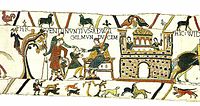
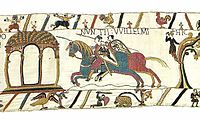
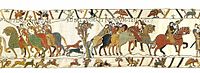
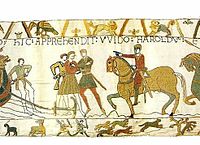
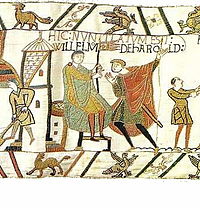
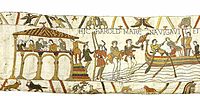
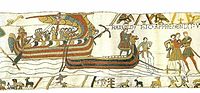
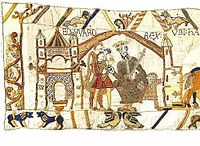
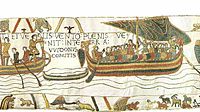
On August 22nd 1485 on the Julian calendar, King Richard III was killed in battle fighting for his throne. He was a good King and as Cardinal Wolsley was told in Henry VIIIs Parliament, ‘he made good laws.’ He strove mightily to make sure that justice was done and in his only Parliament of January 1484, was able to pass 3 ground breaking laws. Firstly he passed a conveyancing law which stopped people selling property with covert entailments or other unmentioned problems. He introduced the bail law. It had been possible for the nobility to accuse folk of a crime and by the time they had been acquitted, weeks or months later, their lands or property had been taken. He also made sure that jurors had a certain wealth to try and avoid bribery by wealthy nobles. All this did not endear him to the rich nobility. And this was Richard’s problem. He was a decent man and put decency and the English first. When his brother Edward IV re-ignited the 100 years war (where the English King claimed also to be the King of France) and eventually accepted the French King’s bribe at Picquany, Richard demurred. It was duly noted by the French. The actions of English privateers on the French was also not welcome. In 1482 Richard was sent by his brother on a chevauchee of the Scottish border. He later went to Edinburgh and nearly caught the Scottish King and took Berwick upon Tweed. This did not endear him to the Scots. He defended the ordinary folk against the power of the declining monasteries which set him against some parts of the church. He even promoted the first cod war against Iceland in 1483! He had been in conflict with Lord Thomas Stanley, a mighty Northern lord and step father to Henry Tudor, since he was 18 when he opposed him in favour of the Harringtons of Hornby. Richard’s reputation was trashed by the brilliant tragi-comedy of Shakespeare for centuries, but modern scholarship (and some old) has revealed a man who wanted to be a good King and could have been a great King. He had come to the throne because the three estates of the land, the Lords temporal and secular and the commons, had asked him to. Edward V, son of Edward IV was illegitimate, and whether Richard had become King or not, the reign of Edward V would have been untenable and Henry Tudor would still have vied for the throne.
In the end the French, the Scots and the disaffected nobility did for him. Ann of Beujeu, sister of the sick Charles VIII, gave Tudor 2000 French regulars, the only regular soldiers present at the battle and they made a difference. 1000 Scots joined in.
Richard and the Yorkists went and the Tudors began. What does it matter? The Tudors became obsessed with dynasty. Richard had no legitimate heir but he was content to name his sister’s son as heir. Not so HenryVIII who was prepared to sacrifice a long and happy marriage and the head of his lover to beget a male heir. In doing so he broke with Rome and replaced the Pope with himself. Roman Catholicism was replaced with English Catholicism. Not a great deal of change there. The dissolution of the monasteries went down well with those vultures who benefited financially. Prior to the Black Death the first son inherited the land, the second son became a knight to fight when required and the third son went into the church, often the monastery. As land became abundant there was no need for this so many monasteries who had had 100 monks were now down to 10. They were on their knees in decline anyway. But when Henry VIII died aged 57 he was followed by the son of the Protestant Jane Seymour, Edward VI, aged 9. In the 6 years of his reign England was changed form Catholic to Protestant. The saints days and festivals went, the churches were stripped of their colour as well as their icons and much that had defined Merry England had been stripped away. Edward only lasted until he was 15 and then, despite an attempt at putting a talented 16 year old Jane Grey on the throne, the new monarch was the violently Roman Catholic daughter of Catherine of Aragon, Mary. Henry VIII had enjoyed burning people alive (he was the model on which the Mad King of game of Thrones was based) but Mary revelled in it. 300 at Tyburn. Such was the effect of this period that in 1688 when England chose James IIs daughter Mary and her Dutch husband over her father, the phrase ‘mass or the stake’ was still on men’s lips. The antipathy to Roman Catholics lasted centuries and is still manifest today in that our Monarch cannot be a Catholic. Sensibly after these two religious fanatics, Edward VI and Mary, Elizabeth I stepped back and stated ‘I have not a window into men’s minds.’
Ireland, I would suggest, also has problems from the Tudor legacy. The Yorkists got on well with the Irish lords. (They were all descended from Normans anyway.) They basically left them to get on with things. Not so the Tudors and the Protestant plantations of Elizabeth’s reign set the seeds for centuries of conflict which we still have today.
Bosworth was touch and go. Richard was defeated by many things and in the end it was his own courage and confidence which caused the final moment. He could have cut and run but it was not his way. The Yorkists fought again two years later at East Stoke and Richard could have been there. More likely is that Henry’s French regulars would have gone home in a few days, as in fact they did, leaving Richard dominant. But it was not his way and we have been left with the Tudor legacy of religious strife and Irish hatred.
It seems appropriate in this time of pandemic to mention the Black Death. I have not included it as a moment where things went wrong for two reasons. Firstly it was an event totally out of control of the human race. It was appalling. 40% of the population died (20% for the nobility.) It came back a dozen times between its peak of May 1349 and 1485 as each new generation reached breeding age thus keeping the population low at about 2.5 million. It must have been a horror of all horrors and says much for the fortitude of medieval England and the power of the Church that the country came out of it. Because come out of it we did with a number of advantages. The loss of bodies meant that labour became more valuable. GDP went down but wages went up. (Compare the recent times of mass uncontrolled immigration when GDP rose but wages were static or fell.) Land was plentiful and land was the main source of medieval wealth. People became more important and that meant girls and women. More girls went to school. More girls obtained apprenticeships. (As an aside it might be noticed that Edward III before the Black Death had 5 blacksmiths one of which was a woman. Women have never been a suppressed gender in England.) The Church lost some of its power as the sons need not find it a safe haven. In many ways the time between Black Death and Tudor times, when the pestilence seemed to give up its hold and there was a population explosion, could be described as a ‘golden age.’ Its a matter of opinion.
What were the Americans Doing?
We are living in unprecedented times! How many times have we heard that? So it might be well to observe that back in precedented times things were pretty unprecedented too, the American Civil War being one of them. Today we are fighting a virus. It is smaller than the wavelength of light which is why we can’t see it under a light microscope. But we know what it is and what it looks like and tens of thousands of things about it. During the ACW they had legions of diseases and certainly knew a lot about them but not what they were. Bacteria were discovered in 1676 by Antonie van Leeuwenhoek but the linkage to specific diseases was developed by Koch after the ACW. Viruses were not identified until the 1930s although vaccination had been developed by Edward Jenner 1798.
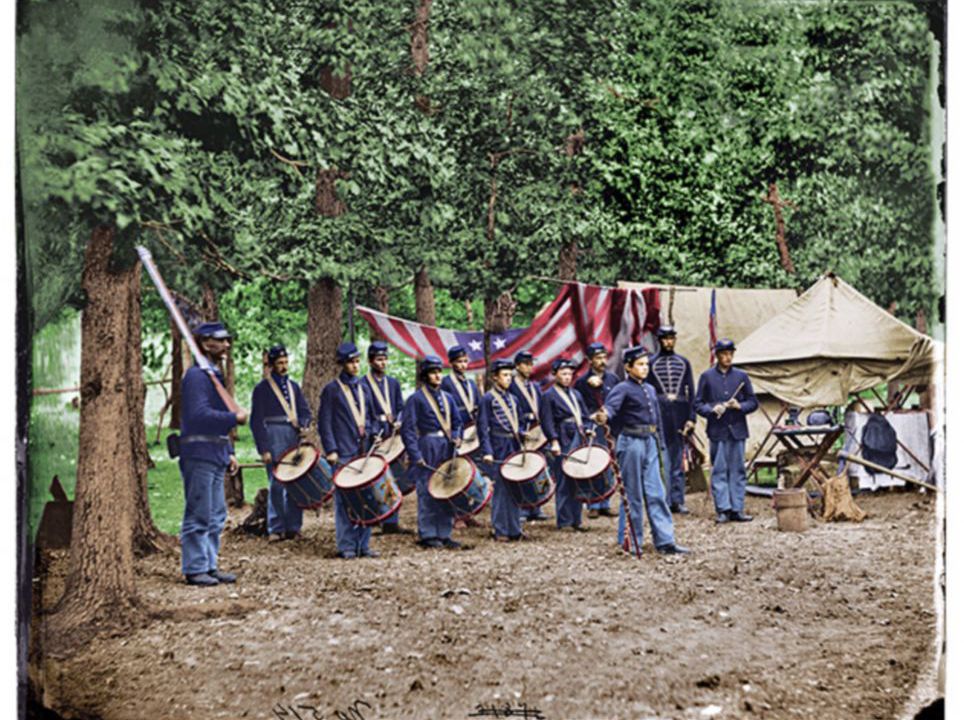
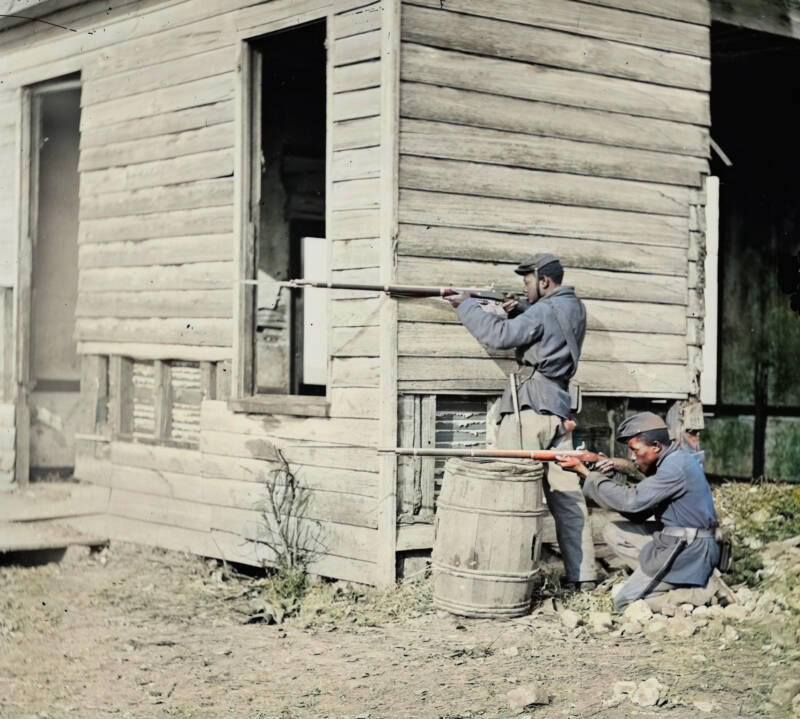
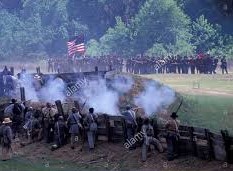
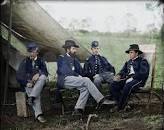
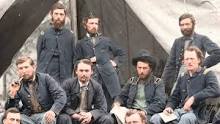
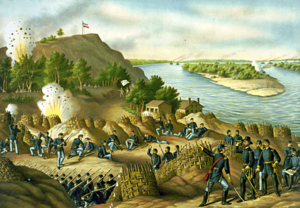
What legions they were! Measles and Mumps were killers. Typhoid, Typhus and Meningitis also. Chest infections going by the names of colds, epidemic catarrh, acute bronchitis were rife. And pneumonia, sometimes called the old man’s friend because it was a peaceful terminal event, was the young man’s enemy. In an age of anaesthetics but no muscle relaxants the patients had to be held down to control their spinal reflexes. Inhalation pneumonia would occur. The vomiting patient would inhale his own vomit and the gastric juices would begin to digest their own lungs. Why else would Jackson have developed pneumonia 3 days after an arm amputation? Malaria was another problem especially in swampy areas. We should also mention diarrhoea from all its causes, whether various forms of dysentery or other types. Remember the Virginia Quickstep and the Tennessee Trots? Don’t forget the Evacuation of Corinth! Cholera could be a problem but mercifully there were no outbreaks in the ACW. Various forms of hepatitis were about but fortunately were probably Type A with low mortality. Tuberculosis was common in the respiratory form (consumption) but also the lymph gland form (scrofula.)
Oh, I nearly forgot Smallpox! Even Abraham Lincoln got it after the Gettysburg Address. “Now I have something I can give everybody!” They said it was mild but he did not recover until mid December. It certainly stimulated vaccination! The southern ports occasionally had visitations of Yellow Fever with a mortality of 20-50%. The counter weapons were quarantine and sanitation. Say what you like about Benjamin Butler, he kept Yellow Fever out of New Orleans.
Quarantine and sanitation were the only weapons they had. Thank heavens for progress and moving on to social distancing and hand washing. There were plenty of other diseases about, not very kind to men undernourished, dehydrated and exhausted so that mortality increased during the war despite better sanitation.
Yes Sir, I sure miss those precedented times.
Best wishes Charles
More About the Article CLICK HERE
Charles Rees April 2020