They live in the soil for between 3-5 years, munching more and more grass roots as they mature into the adult beetle around May time. So the upshot, artificial grass? estimate £14,500,there must be an alternative solution and so the planning started.
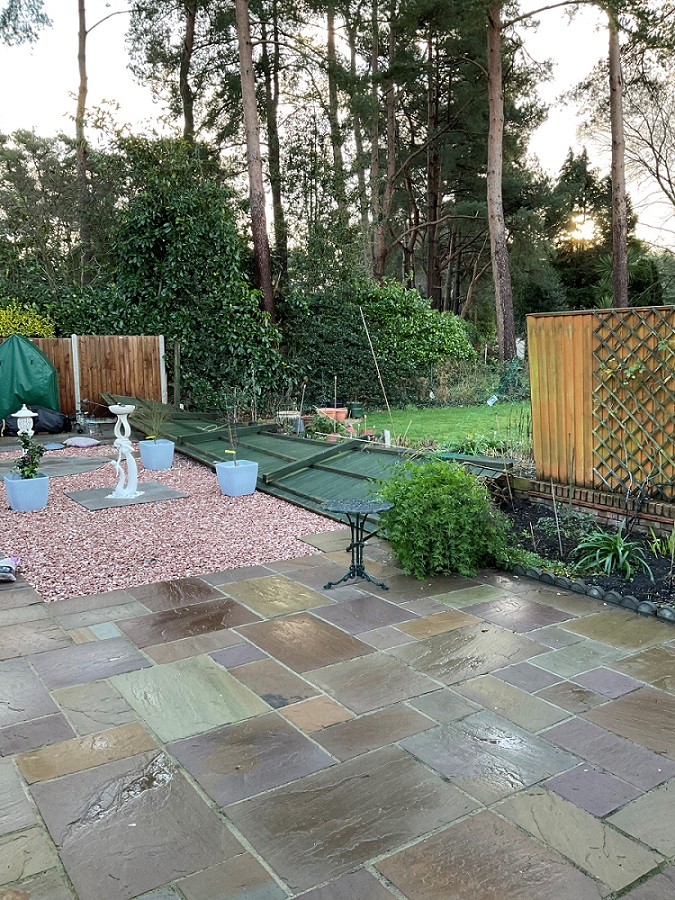
With a score of possible layouts and headaches friends who have a wonderful garden (with lawn) introduced us to Mike, a down to earth landscape gardener and a lovely man. So last Summer, in came the mini bulldozer and havoc reigned but nothing was to much of a problem for Mike and his team and literally tons of lawn and earth were moved,and many adult Chafer bugs found. There was an outline plan but this developed as work progressed and we have been delighted with the end result and during the pandemic a haven of peace and tranquility for us.
For the past 3 years or so prior to last year we spent a fortune with a lawn care company with the ambition to own lush green lawns. Before I continue, if you do not know how a Chafer Bug larvae looks, it is maggot like, something similar to the larvae of the other awful pest, the Vine Weevil. So, back to our horrible little friends (enemies !) the Chafer Bug and Leatherjacket larvae who worked overtime to ensure we didn’t .
In the past we were able to treat the lawn against these pests with an effective insecticide but you’ve guessed it the EEC banned it. We tried the only alternatives Nematodes and a Chafer Bug trap but guess what they didn’t work at all. Finally, when our lawn resembled a ploughed field after Magpies and crows turned the turfs over to get to the juicy grubs we surrendered.
When Gerry asked me to provide a short article to start off a potentially regular discussion topic on anything pertinent to ‘Art’ it was an easy choice for me to make. Regular visitors to our website and many of our club members will already know how I regaled my ‘nearest and dearest’ with comparisons to a Rubens model. Reflective of Baroque tradition Rubens’ voluptuous, curvaceous female forms ooze sexual appeal. I urge you to check out ‘The Three Graces’ and ‘Bathsheba at the Fountain’ as but two examples of this particular aspect of his craft. The dramatic, sensuous paintings, full of movement, had a huge influence on this particular spotty youth. Later, of course, I became enamoured with his portraits, landscapes and altarpieces too. Personal favourite works include ‘The Descent from the Cross’ and ‘Landscape with the Ruins of Mount Palatine in Rome’ – magnificent detail and so evocative of mood. With such images never forgotten in my mind, in later years, I was inspired to visit Rubens’ home (Rubenshuis) in Antwerp, Belgium, a home he designed himself in Italian style, where he created many of his paintings and where he lived with his family and worked with assistants in his studio to deliver commissions. He also received important patrons there and created a unique collection of artworks and books. I found the visit a truly moving experience, the spirit of Rubens in his own house was still somehow very tangible.
It may have been his depictions of the female form that first attracted me to the man but I soon learnt that there was so much more to Peter Paul Rubens than being a hugely successful painter. He was also an adept diplomat in the world of 17th century Catholic and Protestant European politics, travelling widely. Perhaps Rubens diplomacy role was unsurprising as painters often had reason to travel to foreign courts and Rubens was well placed to carry out secretive visits without arousing suspicion, especially as he was a Court Artist. In 1621 Rubens, also fluent in several languages, was called upon to negotiate in France and England on behalf of Isabella (consort then governor of Spanish Netherlands) as Spain, France and England tried to decide with whom to ally or oppose. Rubens was knighted by both Philip IV of Spain and Charles I of England so he did well! Among commissions that Rubens undertook for our own Charles I was to carry out the decoration on the roof of the Banqueting House at Whitehall. As a lover of and former student of history and having, coincidentally, spent much of my adult life entwined in politics in one capacity or another it’s probably no surprise to you that I should find Rubens such an enduring and fascinating character.
Rubens, it seemed to me, was well versed in almost everything, but his death was unbefitting of such a remarkable life. A celebrity in his own lifetime and possibly the most sought out painter in Europe, in 1640 he succumbed to heart failure after a particularly nasty attack of gout which left him unable to paint in the last few months of his life.
I hope that this brief summary may provoke you to discover more about Rubens and his works – there’s a wealth of information to be found on the internet including many images of his wonderful works of art.
Do you have a favourite artist or work of art? Why? I look forward to hearing your stories.
If you would like to see more Rubens art works clickhere.
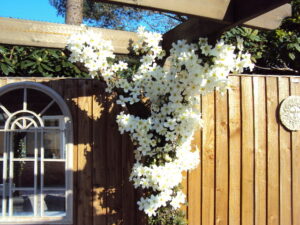
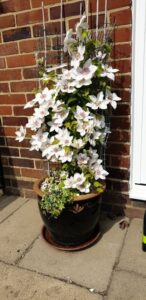
Avalanche Clematis. Photograph supplied by Derek Selby
The plant is an evergreen climbing clematis and it flowered early March for about 6 or more weeks. It was only planted last Summer so looking forward to it spreading further along the pergola next year
The name of the Clematis is “Avalanche” easy to see why.
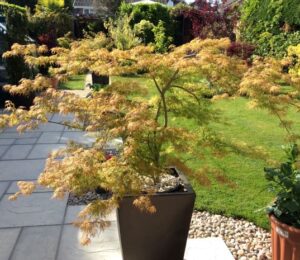
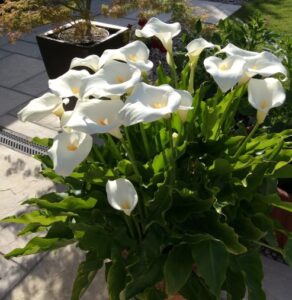
The Acer was rescued from Stewart’s bargain basement sale as a basket case,placed into intensive care for quite a long period . Resulting what is now a beautiful tree. The lilies come in useful if intensive care failed. Tom Mckay.
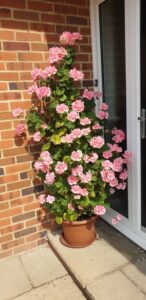
Pictures from our front courtyard of a bargain basement IN-Excess bought geranium from some 4 years ago that has subsequently flourished and a favourite clematis lovingly nurtured by daughter Victoria. Alan Redknap
Dorset Directories for local events and businesses CLICK HERE
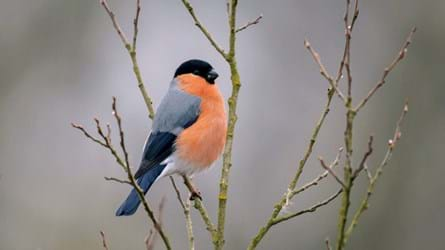
This article helps you to identify wild birds that you may see or hear in your garden or the surrounds.
The Bullfinch
The link below to the Woodland Trust takes you to their wild bird section. If you double click on the bird of interest you will be able to go down to the bottom of the description and listen to the song of the bird. The list is most comprehensive and should be all of the birds you are likely to see in your garden.